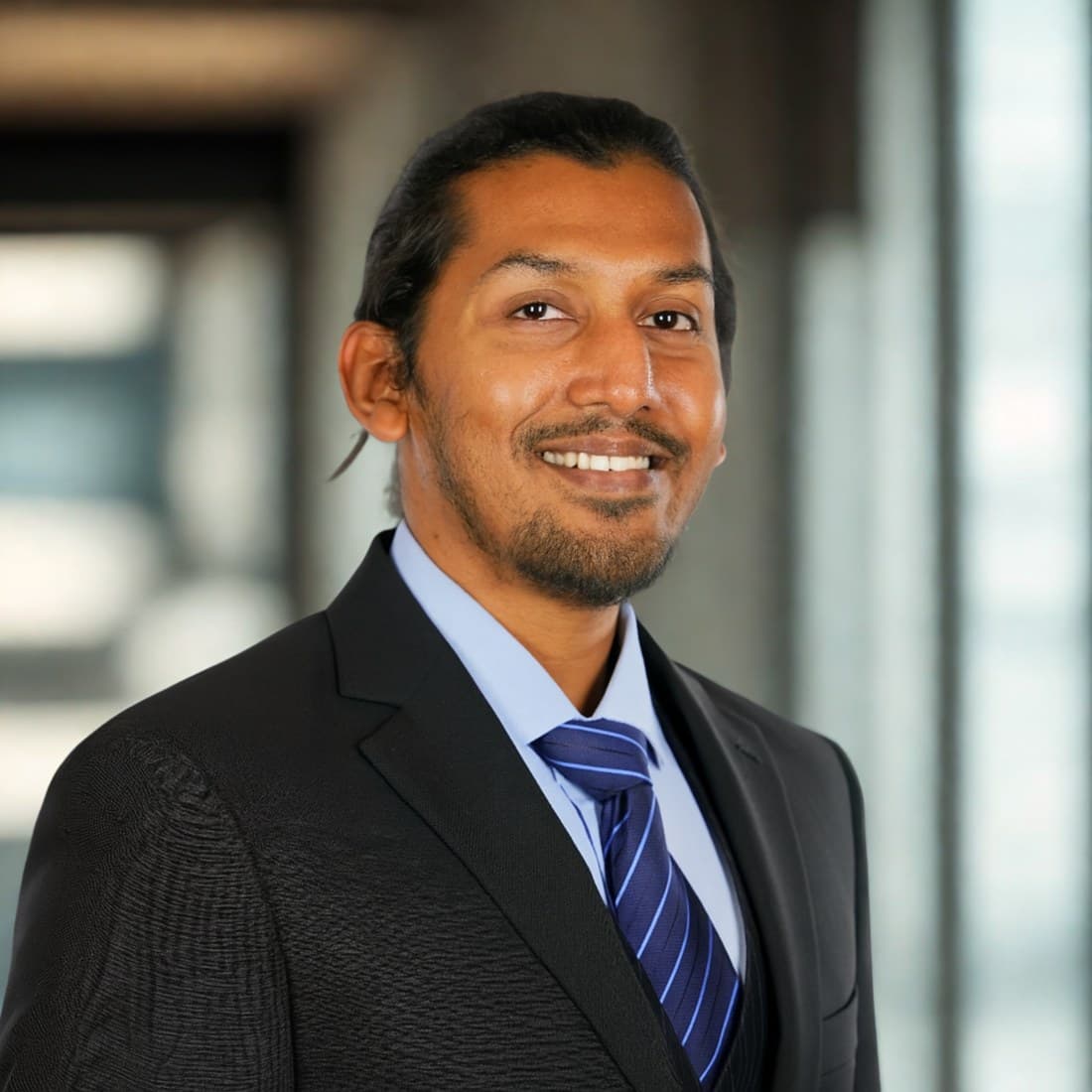
Salman Bin Habib
Nonprofit Financial Management • Public Budgeting & Local Finance
I study how public and nonprofit organizations respond to financial constraints and how those responses shape organizational stability, service delivery, and inequality.
Finance is the common foundation of my work.
My primary research examines nonprofit revenue strategies and financial vulnerability. A second stream studies local public finance, property-tax constraints, and uneven municipal adjustment.
Research program
Two core streams, one cross-sector question
How do financial rules, revenue structures, and institutional constraints reshape organizational choices and the services communities rely on?
Primary research stream
Nonprofit Financial Management
How revenue structures shape financial vulnerability, growth, program continuity, and organizational choice in mission-driven organizations.
- Commercial versus donative revenue reliance
- Financial vulnerability and resilience
- Unrelated business activity and growth
- Program creation and revenue-model choice
Second research stream
Public Budgeting & Local Finance
How state fiscal constraints, local tax bases, and policy design shape municipal revenues, service capacity, and distributional outcomes.
- Property-tax limits and municipal adjustment
- Tax-and-expenditure limitations
- Local fiscal inequality
- Revenue constraints and service delivery
Connected research
Administrative Burden & Public Service
How policy instability, unclear procedures, and financial penalties shape agency engagement, democratic evaluations, and service avoidance.
- Financial penalties during disputes
- Learning, compliance, and psychological costs
- DACA policy disruption
Job market papers
Flagship work
The two papers anchor my nonprofit-finance and public-budgeting research streams.
Commercial and Donative Revenue Reliance and Financial Vulnerability Across U.S. Nonprofit Subsectors
- Research question
- How does reliance on commercial versus donative revenue predict subsequent nonprofit financial vulnerability, and how does that relationship vary across subsectors?
- Data
- IRS Form 990 public-charity panel, 2013-2023
- Design
- Lagged revenue-reliance measures, organization fixed effects, year fixed effects, and subsector interactions
- Contribution
- Moves beyond one-dimensional measures of financial health by evaluating revenue models across specific vulnerability outcomes and service environments.
The Impact of Texas Senate Bill 2 on Municipal Tax Rates: Evidence from 1,101 Cities
- Research question
- How did Texas Senate Bill 2 change municipal property-tax rates and levy growth, and why did adjustment differ across communities?
- Data
- Panel of 1,101 Texas municipalities, 2016-2024
- Design
- Difference-in-differences with local fiscal and economic heterogeneity
- Contribution
- Shows that a uniform statewide tax limit can produce unequal local adjustments: lower-income cities reduced rates more sharply while wealthier cities maintained stronger levy-per-capita outcomes.
Publication momentum
Research moving through the pipeline
Published work, journal revise-and-resubmits, accepted reference contributions, and working papers support an active research agenda.
Currency of culture: Impacts of Charity Navigator’s Culture and Community Beacon
Nonprofit and Voluntary Sector Quarterly
A financial rating system for Canadian charities: A replication of Trussel and Greenlee (2004)
VOLUNTAS
Commercial and Donative Revenue Reliance and Financial Vulnerability Across U.S. Nonprofit Subsectors
The impact of Texas Senate Bill 2 on municipal tax rates: Evidence from 1,101 cities
Teaching
Preparing students to make responsible public and nonprofit decisions
My teaching moves from analytical foundations to professional judgment and then to ownership, collaboration, and accountability.
Build analytical foundations
Give students a strong command of institutions, concepts, and evidence before asking them to evaluate public and nonprofit decisions.
Apply knowledge to professional judgment
Use staged projects, data workshops, cases, and presentations so students practice making and defending evidence-based choices.
Cultivate ownership and accountability
Create clear expectations, meaningful flexibility, collaborative work, and space for students to ask questions and take responsibility for learning.
Advanced Research and Writing, Spring 2026
100% response rate. Students rated preparation and genuine interest in teaching 5.00/5.00, with communication, accessibility, and fair evaluation at 4.67/5.00.
See teaching evidenceRecognition & service
Professional momentum beyond the manuscript
Fellowships, research support, disciplinary service, and doctoral-program leadership reinforce the scholarly record.
Academic community
Conference and training moments
Research develops through presentation, critique, collaboration, and the communities that make scholarship possible.
Job market materials
Start here
A concise set of materials for search committees, collaborators, and colleagues who want to explore the record in more depth.
Curriculum Vitae
Education, publications, research pipeline, teaching, awards, service, and professional experience.
Download CVResearch Statement
Nonprofit financial management, public budgeting and local finance, administrative burden, and five-year agenda.
Read research agendaTeaching Statement
Teaching goals, evidence of effectiveness, courses taught, mentoring, and courses prepared to teach.
Read teaching approachJob-market papers
Primary nonprofit-finance and secondary public-finance papers are summarized on the research page. Drafts can be shared directly for academic review.
Request a paper